The history of rock is often told as if an imposing man with a guitar had always stood at the center of the stage. That version is useful only for posters and short documentaries. In reality, female voices in rock music were never an addition to a male composition. They changed the genre’s format: its timbre, language, and stage behavior.
This story does not begin with MTV or punk. Even before rock and roll reached the peak of its popularity, Sister Rosetta Tharpe brought blues and the electric guitar together in a remarkable way. The Rock & Roll Hall of Fame named her one of the key figures and immortalized her in the Hall of Fame.
Before the Rock Stage: A Voice That Asked No Permission
Sister Rosetta Tharpe’s manner was far from polished concert politeness. She used her voice as an instrument of pressure: stretching phrases and sharply changing the dynamics. For the future of rock music, this was no less important than guitar technique.
Later, the genre was filled with dozens of different female voices: raspy, theatrical, cold, and deliberately imperfect. Many of them shared one common trait: they did not try to sound pleasant in the conventional sense. Their unique vocal qualities were used to claim space.
A Voice Without Filters
Janis Joplin became one of the first rock vocalists whose power was built on exposed nerves. Her singing often sounded as if the song were being born at the very moment of performance and could collapse under its own weight. No one was able to copy that style. Its key feature lay in the absence of distance between the voice and the feeling.
The significance of the performer from Texas proved more substantial than official awards. She was an artist who expanded the acceptable range of female presence on stage. The weaker sex in rock was no longer a decorative addition, but the center of chaos. Joplin’s influence can be described through new rules of the stage:
- female vocals do not have to sound soft;
- emotional sharpness became part of the musical language;
- blues intonation gained a new rock intensity;
- female charisma can be uncomfortable and still magnetic.
Patti Smith: When the Voice Becomes Text
If Joplin worked with emotion as if it were fire, Patti Smith brought a nervous literary energy into rock. Her debut album Horses, was released in 1975 on Arista Records. It was produced by John Cale, a former member of The Velvet Underground. Smith spoke, shouted, broke the rhythm, and returned to the song again. In this case, the female voice in rock stopped being only a vocal phenomenon. It became an authorial position. She could sound like a poet, a rebel, and a strange preacher all at once.
This album is often called a key record of early punk. On it, Patti Smith showed that rock could let in religious imagery, urban grime, and erotic tension. She did not adapt to the audience’s expectations and sang as if she could handle any register or role. Under Patti Smith’s influence, vocalists from different rock styles showed that a ready-made formula need not be accepted.
Suzi Quatro, Joan Jett, and Rock Without Apology
In the 1970s, the female voice in rock began to merge with the force of musical instruments. Suzi Quatro was not just a singer, but a bassist and front figure. She is often called the first woman to reach unimaginable heights and become a leading rock star. Previously, a man with a guitar was seen as the author of the action, while a woman at the microphone was seen as a performer. Quatro broke that pattern: the bass hung on her not as an accessory, but as the center of her stage image.
Joan Jett continued this line in a harder and more direct form. Her version of “I Love Rock ’n Roll” spent seven weeks at number one on the Billboard Hot 100 in 1982. The song was not that complex in construction, but it carried an important shift in intonation. Jett was not asking to be accepted into the rock club; she sounded as if she already owned the room.
Voice as a Striking Force
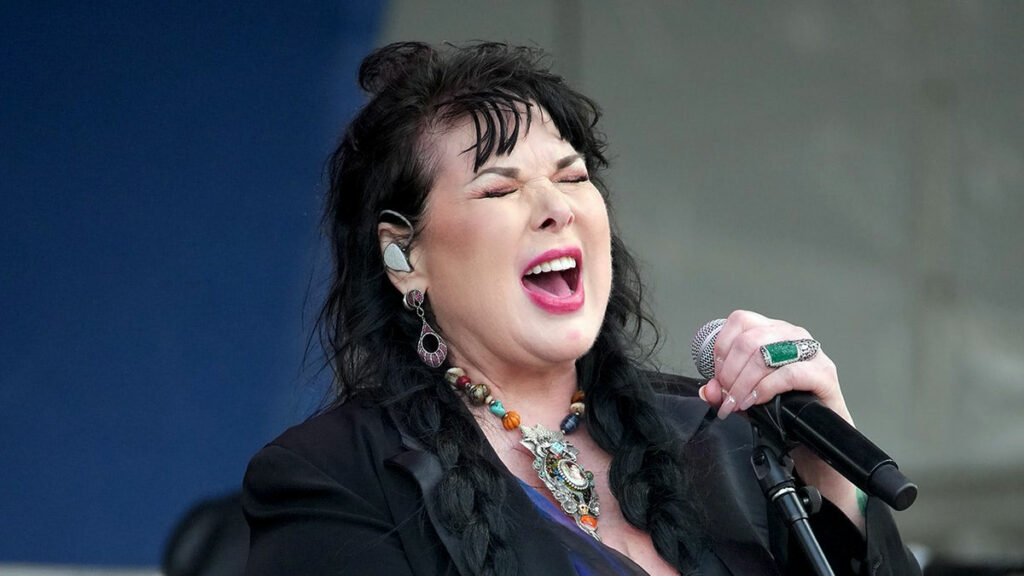
The band Heart gave rock another type of female presence. Ann Wilson had a voice that shifted from broad to hard and almost metallic. Her younger sister Nancy added the guitar architecture. The song “Barracuda,” from the 1977 album Little Queen, climbed to number 11 on the Billboard Hot 100. It sounds like a response to an industry that often looked at women through gossip, sexualization, and condescension.
Riot Grrrl: When the Voice Became Collective
In the 1990s, female voices in rock gained a new political density. Riot grrrl emerged not as a tidy musical style, but as a scene and a form of communication. Bikini Kill, Bratmobile, Heavens to Betsy, and other bands are associated with it. The New York Public Library describes the movement as a culture in which girls did not simply consume music, but created their own space, bands, and magazines.
Kathleen Hanna of Bikini Kill used her voice differently from the rock singers of previous decades. There was little desire to please in her delivery. Screams, slogans, sarcasm, and broken phrases became the material of the song. At her concerts, women were encouraged to come closer to the stage and take the place that, in punk clubs, was often automatically given to men.
Today, the female voice in rock can no longer be described in a single way. There are artists who work with heavy vocals, indie performers with conversational manners, and bands where the voice deliberately sinks into guitar noise. The industry has become broader. Vocalists keep changing fundamental norms again and again, and without female voices, rock would be poorer in timbre, language, and temperament.